
If you are searching for a comforting yet elegant meal that requires minimal cleanup, then you will absolutely adore this recipe for One Pan Roasted Turkey Breast With Veggies. It combines tender, juicy turkey breast infused with fragrant garlic, butter, and herbs alongside perfectly roasted fall vegetables all cooked together in a single pan. The result is a harmonious blend of hearty flavors and satisfying textures that feels like a warm hug on a plate. Whether it’s a weeknight dinner or a special gathering, this dish proves that simplicity and deliciousness can go hand in hand.

Ingredients You'll Need
Gathering the right ingredients for One Pan Roasted Turkey Breast With Veggies is a breeze because each one plays a vital role in building flavor, texture, and color. These essentials come together effortlessly to create a dish that is as wholesome as it is scrumptious.
- 6 to 7 cups chopped mixed vegetables: A medley like Brussels sprouts, carrots, and cauliflower adds variety in taste, texture, and vibrant color to the dish.
- 1 tablespoon extra virgin olive oil: This coats the veggies helping them roast beautifully while adding a subtle fruity richness.
- 1 turkey breast boneless skinless, 4 to 5 pounds: The centerpiece of the meal, providing lean protein and juicy tenderness when cooked just right.
- 1 ½ teaspoon salt: Essential for seasoning the turkey and enhancing all the natural flavors.
- 1 tablespoon white pepper: Adds a mild kick and subtle depth without overpowering the other ingredients.
- ⅓ cup butter softened: Creates a luscious, aromatic coating that locks in moisture and adds richness.
- 1 tablespoon crushed garlic: Brings a robust, savory punch that is simply irresistible.
- 1 teaspoon dried thyme: Offers a delicate herbal note that pairs beautifully with poultry and veggies.
- 1 teaspoon dried rosemary: Infuses an earthy, pine-like aroma that elevates the entire dish.
How to Make One Pan Roasted Turkey Breast With Veggies
Step 1: Prep the Oven and Vegetables
Start by positioning your oven rack in the bottom third and preheating it to 175 °C (350 °F). This setup ensures even heat distribution during roasting. Chop your chosen vegetables into sizes that coordinate well with the turkey breast’s thickness, so everything cooks in harmony. Spread these vegetables evenly in a large roasting pan, drizzle with olive oil, and toss gently to coat every piece.
Step 2: Season the Turkey Breast
Pat the turkey breast dry with paper towels to encourage crispness and better seasoning adherence. Rub the breast all over with salt and white pepper for a perfectly balanced flavor foundation. Nestle it in the middle of your vegetable bed, making sure it sits securely and evenly surrounded.
Step 3: Prepare the Herb Butter
In a small bowl, blend your softened butter with crushed garlic, dried thyme, and dried rosemary. Smear this aromatic mixture over the top of the turkey breast. This butter mixture will baste the meat during roasting, keeping it moist and imparting irresistible fragrance throughout the cooking process.
Step 4: Cover and Roast
Tent the turkey breast loosely with aluminum foil, folding edges down but leaving ends open for ventilation. This step helps the meat remain juicy while allowing excess steam to escape. Pop your pan into the oven and roast until the turkey reaches an internal temperature of between 69°C (157°F) and 71°C (160°F). This usually takes about 20 minutes per pound of turkey, but keep an eye on it to avoid overcooking.
Step 5: Rest and Carve
Once the turkey hits the perfect temperature, remove it from the oven and let it rest for around 10 minutes. Resting allows juices to redistribute, ensuring every slice is succulent. Transfer the breast to a cutting board or warm dish, carve into slices, and serve alongside the beautifully roasted vegetables nestled beneath.
How to Serve One Pan Roasted Turkey Breast With Veggies

Garnishes
Add a sprinkle of fresh chopped parsley or thyme leaves right before serving to give the dish a fresh, vibrant touch. A little twist of lemon zest over the veggies also brings a bright contrast that complements the rich buttery flavors marvelously.
Side Dishes
This dish is so complete on its own that sides are optional, but if you want to serve something extra, a light mixed green salad or some warm crusty bread works wonders. These can help round out the meal by adding freshness and texture without stealing the show.
Creative Ways to Present
Try serving the turkey breast sliced over the roasted vegetables on a rustic wooden board or a large platter. Drizzle any pan juices over the top for an inviting, restaurant-quality presentation. For a family-style meal, place the entire pan on the table and let everyone dig in – it’s cozy, informal, and so inviting.
Make Ahead and Storage
Storing Leftovers
Wrap any leftover turkey breast and vegetables tightly in airtight containers and store in the refrigerator for up to 3 days. This keeps the flavors intact and prevents the meat from drying out.
Freezing
You can freeze leftovers by placing the turkey slices and veggies in freezer-safe containers or bags. Label them and freeze for up to 2 months. When ready to enjoy again, thaw overnight in the fridge for the best texture.
Reheating
Reheat gently in a low oven (around 160 °C or 325 °F) covered with foil to keep the meat moist. Alternatively, use a microwave on medium power in short bursts to avoid drying out the turkey and vegetables.
FAQs
Can I use bone-in turkey breast instead of boneless?
Absolutely! Bone-in turkey breast can add extra flavor during roasting, but it may require a longer cooking time. Always use a meat thermometer to ensure it reaches the correct internal temperature.
What vegetables work best with One Pan Roasted Turkey Breast With Veggies?
Brussels sprouts, carrots, and cauliflower are classic choices, but you can also use broccoli, parsnips, fennel, or even butternut squash. Just keep the vegetable sizes consistent for even cooking.
Do I need a meat thermometer to make this recipe?
While a meat thermometer is highly recommended for perfect results and food safety, you can check doneness by observing the color of juices running from the thickest part of the breast—it should run clear, not pink or red.
Can I prepare this dish in advance?
Yes, you can chop veggies, season the turkey, and prepare the herb butter a few hours ahead to save time. Just keep everything refrigerated until ready to roast.
How do I make sure the vegetables don’t get overcooked?
Size and layering matter! Chop vegetables in uniform sizes and spread them in a single layer around the turkey. Keeping them from being crowded allows even roasting alongside the meat.
Final Thoughts
There is something incredibly satisfying about preparing One Pan Roasted Turkey Breast With Veggies that fills your kitchen with inviting aromas and your table with wholesome goodness. It’s a recipe that welcomes both busy nights and special occasions with open arms, promising a meal that’s as cozy as it is delicious. I genuinely encourage you to try this dish soon—you might just find it becoming a new family favorite!
PrintOne Pan Roasted Turkey Breast With Veggies Recipe
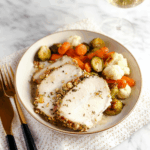
This easy one pan roasted turkey breast with veggies is a flavorful and convenient dinner option featuring juicy boneless, skinless turkey breast roasted alongside tender mixed vegetables. Infused with garlic, butter, and aromatic herbs, this dish requires minimal cleanup and yields a comforting, wholesome meal perfect for family dinners or special occasions.
- Prep Time: 10 minutes
- Cook Time: 1 hour 30 minutes
- Total Time: 1 hour 40 minutes
- Yield: 8 servings
- Category: Main Course
- Method: Roasting
- Cuisine: American
- Diet: Low Fat
Ingredients
Vegetables
- 6 to 7 cups chopped mixed vegetables (Brussels sprouts, carrots, cauliflower)
Turkey
- 1 turkey breast, boneless skinless, 4 to 5 pounds
Seasonings & Butter Mixture
- 1 tablespoon extra virgin olive oil
- 1 ½ teaspoon salt
- 1 tablespoon white pepper
- ⅓ cup butter, softened
- 1 tablespoon crushed garlic
- 1 teaspoon dried thyme
- 1 teaspoon dried rosemary
Instructions
- Preheat Oven: Place the oven rack in the bottom third of the oven and preheat to 175 °C (350 °F).
- Prepare Vegetables: Chop 6 to 7 cups of mixed vegetables into pieces sized according to the turkey breast thickness, to ensure even cooking. Spread them in a single layer in a large roasting pan or casserole dish. Drizzle with 1 tablespoon of extra virgin olive oil and toss to coat evenly.
- Season Turkey: Pat the turkey breast dry with a paper towel. Rub it all over with 1 ½ teaspoon salt and 1 tablespoon white pepper. Place it in the center of the roasting pan among the vegetables.
- Prepare Butter Herb Mixture: In a small bowl, combine the softened ⅓ cup butter with 1 tablespoon crushed garlic, 1 teaspoon dried thyme, and 1 teaspoon dried rosemary. Spread this mixture evenly over the top of the turkey breast.
- Tent Turkey: Cover the turkey breast loosely with a piece of aluminum foil, folding edges but leaving ends slightly open for airflow.
- Roast: Place the baking pan in the preheated oven. Roast the turkey breast until the internal temperature reaches between 69°C (157°F) and 71°C (160°F), approximately 20 minutes per pound.
- Rest: Once the turkey reaches 69°C (157°F), remove it from the oven and let it rest for about 10 minutes to allow juices to redistribute.
- Serve: Transfer the turkey breast to a cutting board or warm serving dish, carve into slices, and serve alongside the roasted vegetables.
Notes
- Seasoning quantities are based on a 4 to 5 pound turkey breast; adjust salt and spices proportionally for smaller or larger breasts.
- Vegetable choices can vary; use low-carb options like broccoli, turnips, parsnips, fennel bulbs, radishes, pumpkin, butternut squash, leek, or shallots. Chop veggies to uniform sizes for even roasting.
- Without a meat thermometer, check turkey doneness by piercing the thickest part with a skewer after 1 hour (for half breast) or 90 minutes (for full breast). Clear juices indicate the turkey is cooked; pink or red juices mean it needs more time.
Nutrition
- Serving Size: 1 serving (approx. 160g turkey and 1 cup vegetables)
- Calories: 320 kcal
- Sugar: 4 g
- Sodium: 520 mg
- Fat: 15 g
- Saturated Fat: 7 g
- Unsaturated Fat: 7 g
- Trans Fat: 0 g
- Carbohydrates: 12 g
- Fiber: 4 g
- Protein: 35 g
- Cholesterol: 85 mg


Leave a Reply